Nine write-ups in the archive so far 246 hours logged in total Every piece read by two others before posting
Xilarevoku emblem: an open book forming a directional pad Xilarevoku Games, written slowly

The archive

Everything we have posted, oldest kept as written

Nine pieces since the room opened in February. We do not quietly rewrite old work to make it look better — where a write-up has aged badly, a dated note sits at the top of it saying so. Use the strand filter below to narrow the list.

Strand Showing all 9 write-ups
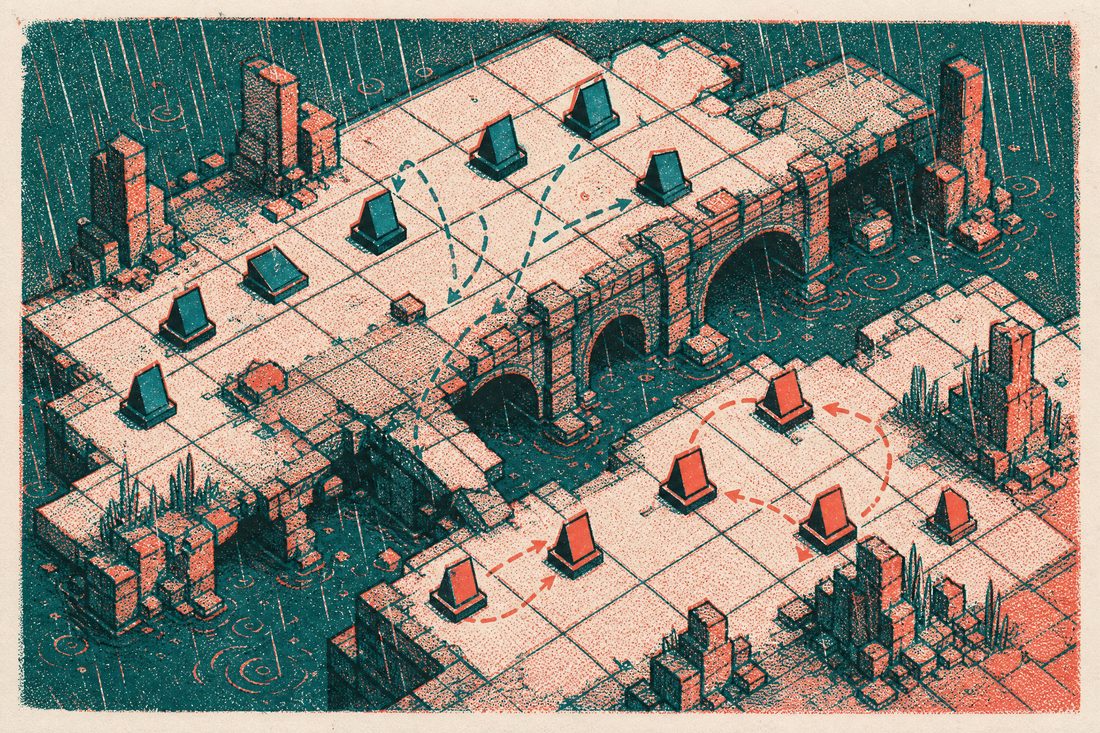
Illustration of a tactical skirmish grid over a rain-soaked ruined bridge

A skirmish game that finally lets you refuse the fight

Withdrawal is usually the losing move. Here it is a whole campaign layer: the map remembers which bridges you never crossed, and the third act rearranges itself around the fights you avoided. The opening four hours actively hide this, and our first draft of this write-up was wrong because of it.

The interface is the weak point — three menus deep to check something the campaign map should simply show you. Worth the friction, but only just.

Asks of you
Patience through a poor first evening.
Warn a friend
Reloading after every loss defeats the entire design.
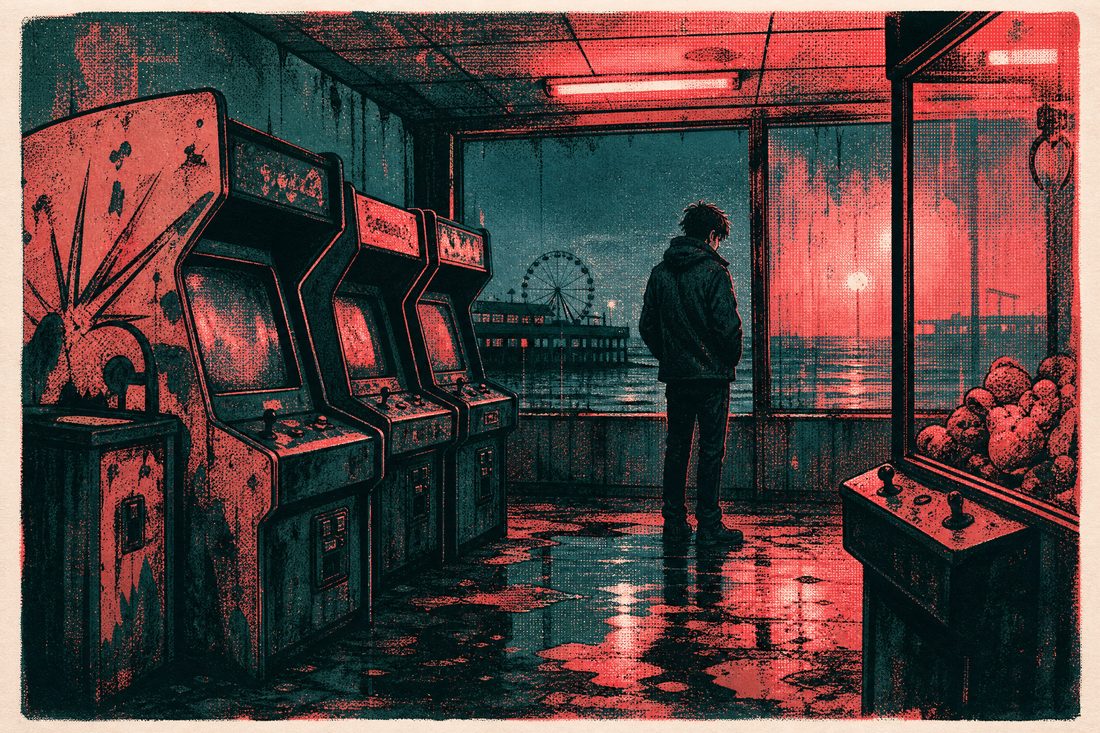
Illustration of a rundown seaside amusement arcade at night with a lone figure

Set in a coastal town that behaves like a real one

An out-of-season pier town where most of the day is deliberately uneventful. Conversations circle back on themselves, a shop closes and never reopens, and the game trusts you to find that interesting. It reads as observed rather than researched, which is rarer than it should be.

The last hour reaches for a twist the previous twelve had made unnecessary. Two of us think that undoes the whole thing; the write-up carries both positions rather than settling it.

Asks of you
Comfort with long walks that lead nowhere in particular.
Warn a friend
Fixed-size subtitles with no scaling option at all.
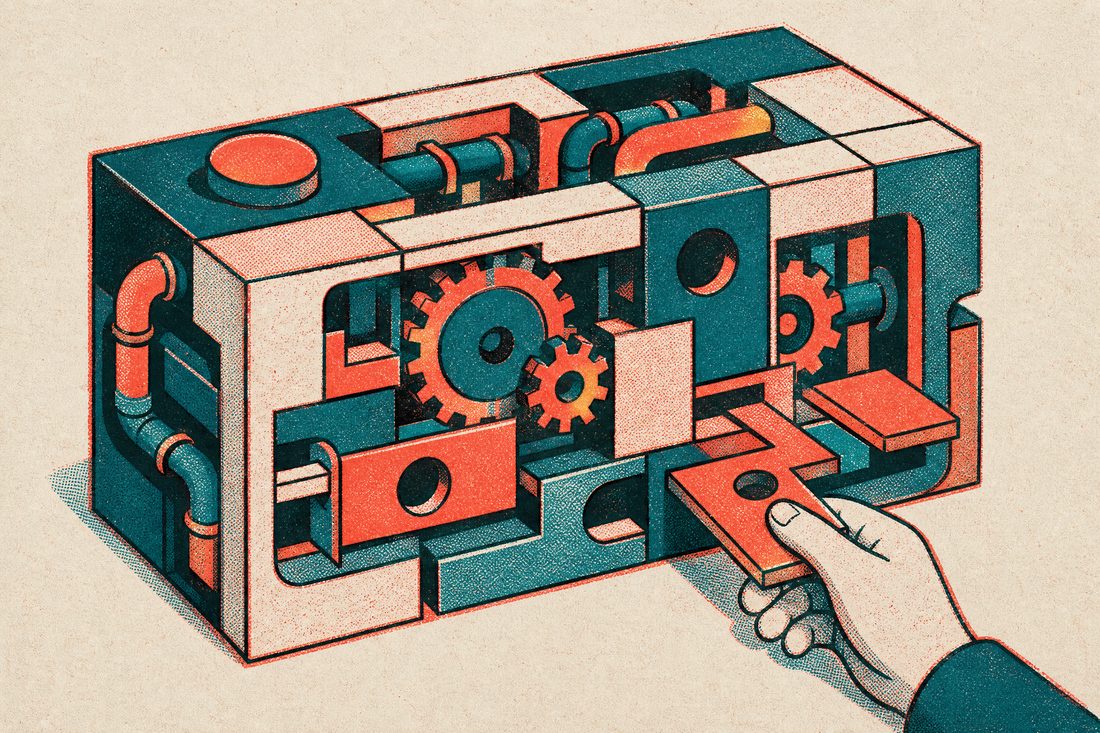
Illustration of an interlocking mechanism of pipes, cogs and sliding panels

Ninety rooms, and the ninetieth explains the first

The central rule stays hidden until roughly halfway, then reframes everything already solved. The structure is familiar; what is not familiar is that the early rooms remain honestly solvable beforehand, so the reveal widens the game rather than retroactively mocking you for missing it.

Finished twice to confirm that holds on a second pass. It does, which is why this went up a week later than planned.

Asks of you
Paper notes. The in-game journal is not sufficient.
Warn a friend
One late room depends on colour separation with no alternative cue.
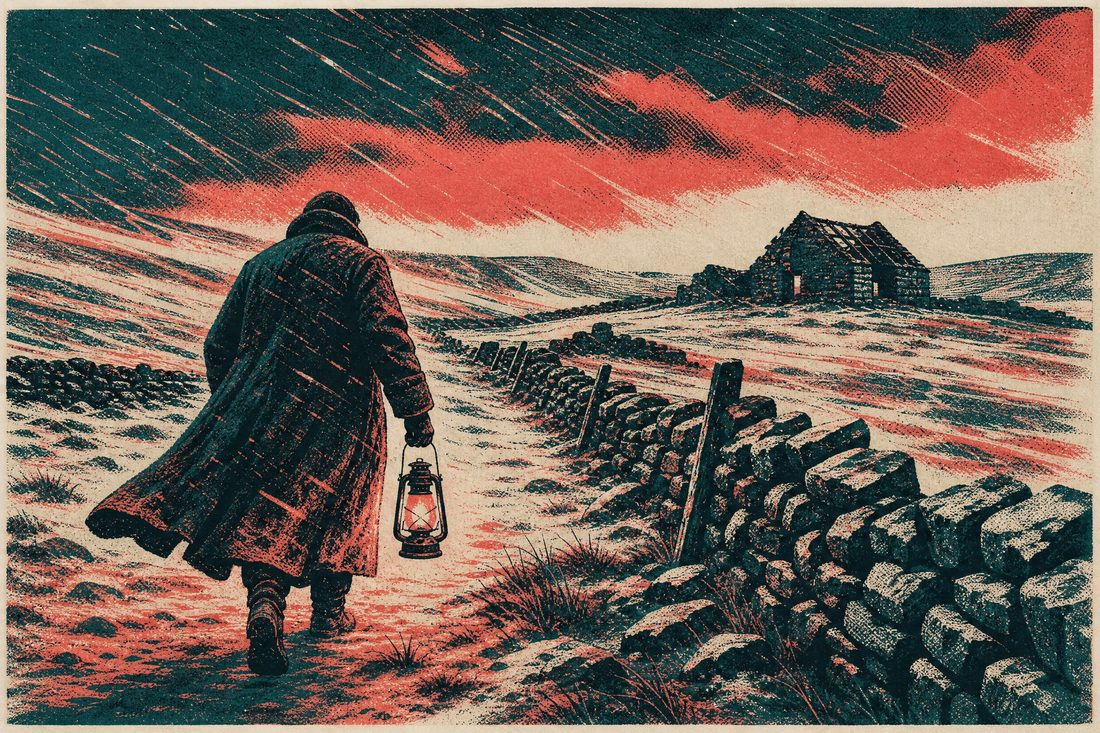
Illustration of a lone figure crossing a bleak upland moor in sleet carrying a lantern

Weather as an antagonist, handled without melodrama

Forty-one hours in and it still comes down to reading cloud cover at dusk correctly. No combat at all. Failure means arriving somewhere too late, and the game works hard to make that legible before it happens instead of after.

Brutally slow to open and explains nothing about its own systems. Most people will stop on the first evening, and the piece is candid that this is a narrow recommendation.

Asks of you
Two or three evenings before it resolves into anything.
Warn a friend
No pause during travel sequences.
Illustration of an amusement arcade interior at night, used again for a second narrative write-up

Six hours of dialogue and not one branching choice

A completely linear conversation game, which in 2026 counts as a provocation. You cannot change what happens; you can only decide how closely to pay attention. The writing is strong enough to make that feel generous rather than restrictive, though it took Dev roughly eight hours to stop resenting it.

A dated note now sits at the top of the original piece: on reflection we undersold how much the fixed structure limits replay value, and the letters page argued us into saying so.

Asks of you
Accepting that your input genuinely does not matter here.
Warn a friend
No transcript log, so a missed line is missed for good.
Illustration of a tactical grid map, used again for a second tactics write-up

A supply-line game pretending to be a war game

Every battle is decided three turns before it starts, in a logistics screen the game barely draws your attention to. Once that lands, the combat animations start to feel like a formality — which is either the point or a serious presentation failure, and the piece argues it is the former.

Aoife lost eleven consecutive campaigns before the pattern became visible. That number is in the write-up because it is the most useful thing we can tell a newcomer.

Asks of you
Reading a spreadsheet and enjoying it.
Warn a friend
Tutorial teaches combat and skips logistics entirely.
Illustration of a mechanical puzzle box, used again for a second puzzle write-up

Short, complete, and confident enough to end

Sixteen hours and it stops. No endless mode, no daily challenge, no reason to return. In a month of games that would not let go, this one's willingness to be finished felt close to a courtesy.

The difficulty curve wobbles badly around the two-thirds mark, where three rooms in a row lean on the same insight. Noticeable, forgivable.

Asks of you
Very little. This is the easiest recommendation in the archive.
Warn a friend
Genuinely short. Know that going in.
Illustration of a figure on a moor, used again for a second survival write-up

Building a shelter is easy; keeping it is the game

The construction systems are shallow on purpose. What the game actually simulates is decay, and the second week of in-game time turns into a slow argument with entropy that we found unexpectedly moving rather than tedious.

Where it fails is the interface for repairs, which requires so many confirmations that maintenance becomes a chore in the wrong sense of the word.

Asks of you
Getting used to losing things you spent hours on.
Warn a friend
Repair menus need four confirmations per action.
Illustration of an arcade interior, used again for the earliest narrative write-up

The first thing we ever posted, kept exactly as written

Our opening piece, and it shows. Too many adjectives, not enough description, and a conclusion that arrives before the evidence for it. We have left it up untouched because a room that quietly improves its own back catalogue is not a room you should trust.

A dated note above it lists the three things we would now do differently. The game itself — a small domestic story told across one flat — deserved better attention than we gave it.

Asks of you
Nothing much. It is ninety minutes long.
Warn a friend
Our own write-up is the weakest link here, not the game.

Coming next

The tactics strand comes round again on 6 August, then narrative on the 13th. Requests are welcome through the letters page, though a request is not a promise — we have turned down more suggestions than we have taken up, usually because nobody in the room has the right ear for that genre.

Something wrong here

Factual errors get corrected within two working days and logged publicly with the date. If a write-up above misstates something about a game you know well, that is exactly the letter we want.

Report a mistake

This site keeps two small values in your browser's local storage: whether you have dismissed this notice, and a private count of pages you have opened. Neither leaves your device and there is no analytics service behind them. The cookie policy lists both in full.